Monday, March 2, 2015

An Overview of Board Games

Board Games are generally split into three major categories heavy, medium, and light 'weight' games with two minor categories medium-heavy and light-medium for more subtle categorization. These weight classes, which  are oddly similar to boxing weight-classes, are determined by three major aspects, length, difficulty, and complexity. The longer, more difficult, or more complex a game is the higher along the weight track it settles. This is generally what you look at to determine, at a glance, if you and your gaming group will enjoy a game. Some groups like long games, others short and simple, and everything in-between.

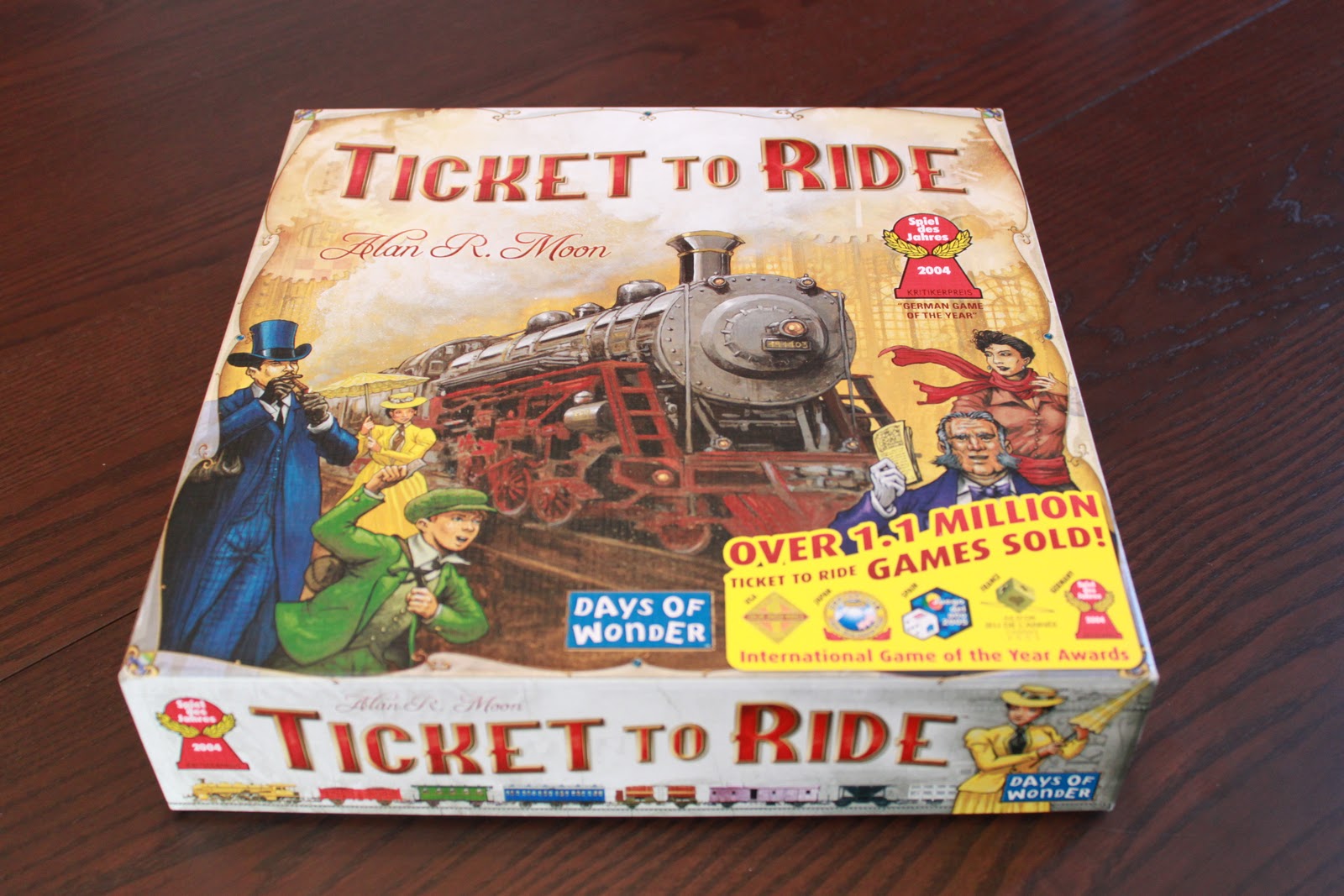
After the general 'weight' of a game is determined then a games key mechanic, or game-play type, is defined to narrow down the game to a final pretty specific position. Some mechanics which I'll explain in more detail in future posts include, worker placement, area control, bluffing, etc. So for example a game like Ticket to Ride is firmly in the light weight category, taking roughly an hour to play, with very simple player actions and rules. It's three key mechanics include hand management due to objective cards, route networking represented by laying train carts along routes on the board and finally set collection as you try to collect certain numbers of specific colors of cards to lay those colored tracks. And that is how you classify a board game.

This brief overview will be useful as I talk about games and make references to some of the terms above while introducing and describing new ones. I'll end this post with a quick review of Ticket to Ride as template for how future posts will generally read.

Ticket to Ride 
Ticket to Ride is one of the few things that could aptly be described as an instant classic, a term so overused it's a wonder anythings cultural impact is ever really determined, but Ticket to Ride earns the title as it firmly establishing an entirely new baseline for what games can and should be. For anyone whose experience with board games began and ended with games like Monopoly, Candy Land, Life, etc. Ticket to Ride is such an approachable, elegantly designed, and wonderfully enjoyable experience you'll curse the names of those so called 'classic' board games. Ticket to Ride is a perfect game to introduce to non-gamers and experienced gamers alike. Player Interactions are less confrontational and everyone's goals are slightly different so antagonism is kept to the minimum.

The game revolves around collecting different colored cards that allow you to lay tracks of the same color. You lay these tracks in conjunction with your destination cards that show you which cities on the map you need to connect. Connect all your destination cards and you can risk drawing more, a risk because if you do not complete them the score they would have afforded you will be deducted from your total. At the end you are scored for number tracks laid, longest continuous route, and most destination cards completed. And that's all there is to it, Ticket to Ride takes mere minutes to explain and is so quick to play and simple to understand I can't imagine someone having a bad experience as long as everyone is playing correctly. 

Wednesday, February 25, 2015

Agent Carter Season Review


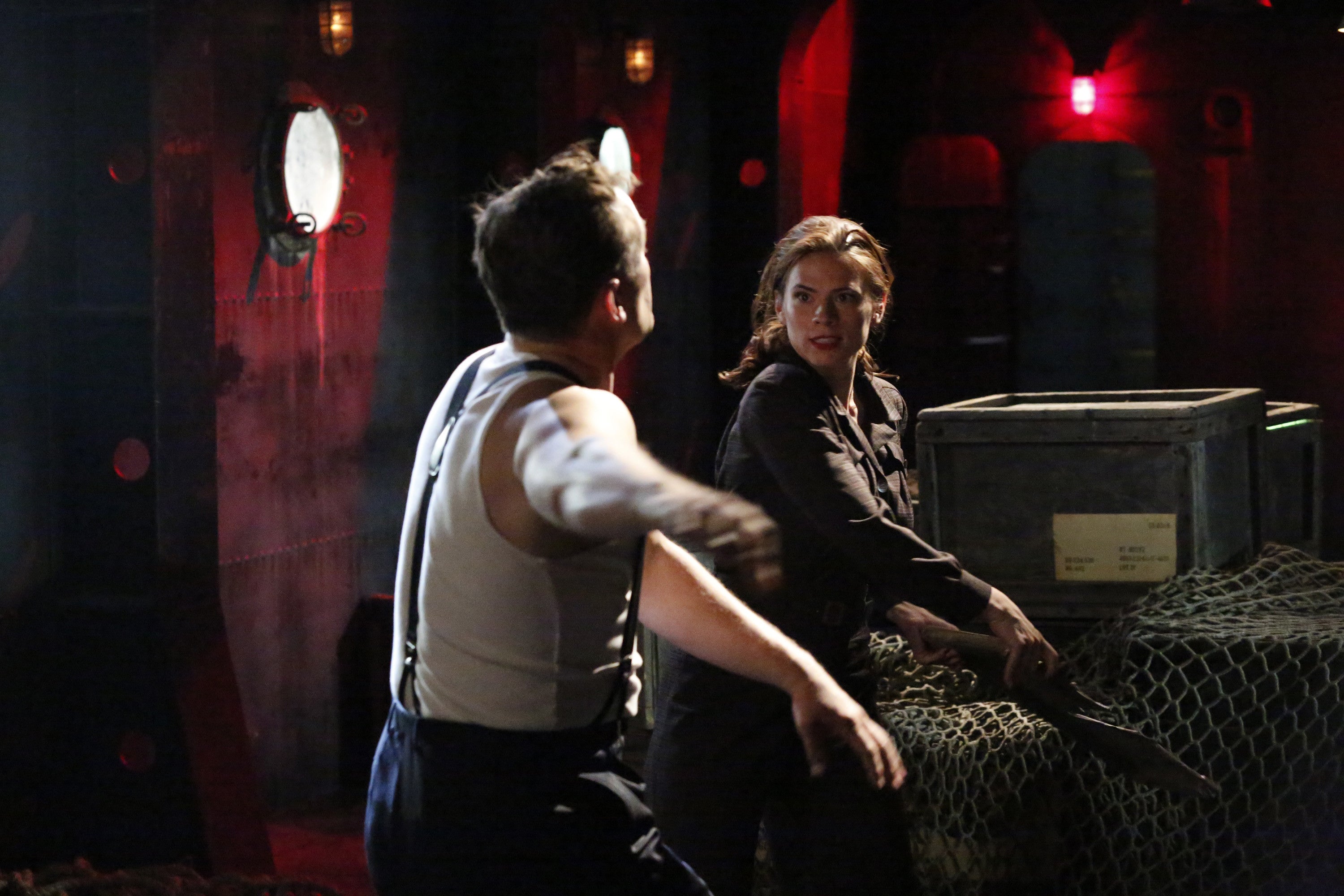
Agent Carter follows the titular Peggy Carter after the seeming death of Captain America and the end of World War II. During the war Carter was a highly respected and high ranking member of the Strategic Scientific Reserve which was responsible for fighting HYRDA and developing the Super Soldier Serum which would transform the frail Steve Rogers into Captain America. But upon returning to the states Carter was relegated to the second-class citizen status the majority of women found themselves in during this period in time. Carter is forced to secretly undertake a mission for Howard Stark, an old friend from the war, to clear his name after several weapons he developed suddenly disappear and is framed for selling them to the enemy.

Let's get this out of the way now, Agent Carter is a fantastic show that I hope sees renewal simply because of how dishearteningly risky it is. I say disheartening because it shouldn't be a risk to have a female lead, or to have a period setting, or for a show to so willingly ignore a myriad of other conventions. Agent Carter is fresh, fun and a fantastic addition to the ever growing Marvel Cinematic Universe. One of the things I love about the series is Peggy Carter herself, she isn't just the idealistic model of a 'strong female character' she is a real female character. Carter is strong yes, but she is also flawed and complex and that's what makes a good character, that and a great performance from Haley Atwell who continues to knock it out of the park in her continued appearance as this character.

One of things I love about the ever expanding MCU is that every character has the potential to be fleshed out. Peggy Carter began as the love interest in the first Captain America film, coincidentally the only romance in a Marvel film that actually works. But everyone was so enamored with her character that we all wanted to know more about her, so we got a short film continuing her story after the war as well as a small and highly emotional scene in the second Captain America film. We slowly learned more about her and her history but it wasn't enough, so a starring vehicle of her own was the next step. This first season was a great development of her character, both the struggle she has adjusting to post war life as well as dealing with the still recent loss of Captain Rogers. The entire season is a perfectly paces and self contained 8 episodes so if our time with Peggy during this period in her life is to end after this one season at least it ends neatly tied up.

But this isn't the last we'll see of Agent Carter even if this is the only season of this show, Peggy is set to appear in this years Avengers 2: Age of Ultron as well as Ant-Man. It's the power of the MCU that a popular character can continue to grow on screen across film and television. The first season of Agent Carter is great, the production is fantastic feeling more like the late 1940's than Mad Men ever has any of its eras. The characters while only having 8 episodes to develop manage to be fully fleshed out characters, and no one is a one note villain or hero. Even the men who continuously belittle Agent Carter are sympathetic as the season continues. The death of principal character surprisingly manages to elicit real emotion after only 7 episodes, that's the advantage of strong nuanced characters and great performances. But the real stars of the series are Peggy Carter and Edwin Jarvis, together both actors give steller performances and revel in their chemistry for some of the most memorable moments across the entire season.

I could go on for several more paragraphs about how much of a relief it is to see a broadcast network series without a romantic relationship in sight, or how well it ties into the existing MCU, or how amazing the effects are, or how the cameos are more than fan-service. But suffice to say  I really enjoyed the show and it stands as a stark and refreshing contrast to everything else in the MCU right now. At the same time Agent Carter does take a few missteps; some things are resolved too conveniently, a consequence of the short episode order I'm sure, but it feels cliche regardless. And finally most of the moments played for laughs fall flat. But apart from those minor quibbles Agent Carter is a fine series with two phenomenal leads in  Hayley Atwell and James D'Arcy that deserves to be further explored in future seasons. I for one will be praying to the television network gods for a renewal.
Overall Season Score 
(4 out of 5)

Tuesday, February 24, 2015

Board Game Fever

A couple of times a year I get this itch, I've never openly discussed it for obvious embarrassing reasons but suffice to say I've tried every cream and ointment and it never dissipates. One day a few years ago I was randomly scouring the internet for a cure when I came across a fervent community around board games. Alas the itch subsided as I explored this fascinating new rabbit hole I would soon find myself lost within, This was new to me, the only board games I had played were popular mainstream games like Monopoly, Trouble, Clue, etc. I was not aware that in the mid 90's European style board games, mostly from Germany, began making their way over to the U.S. and taking the table top community by storm. Settlers of Catan was probably the earliest one of these games to really take off and since then these 'Designer Board Games' have ushered in a more heavily thematic, mindbogglingly creative and intensely strategic era of board games that have reinvigorated enthusiasts and captured the attention of non-gamers alike.
It's been about two years since I've gotten into tabletop games, a more apt descriptor as many games don't even bother with a board, but I still consider myself new to the hobby. The very first set of games I bought I introduced to friends and they seemed to enjoy them quite a bit, since then I've expanded my collection while introducing different genres and slowly increasing the complexity of the games we play. We started off with incredibly simple games that I could explain in 5 minutes and included some strategy but light on complex mechanics, games like: Ticket to Ride, Munchkin, Tsuro and Zombie Dice. Ticket to Ride is a real highlight, correctly considered a modern day classic to rival the all time greats, in fact the game is better than any family game in existence and every home should have a copy, it's simple but doesn't lack complexity and can be easily explained to anyone, even the family dog. From there things escalated quickly.
The games I mentioned above are described as 'light' or 'family' games, they are incredibly simple and typically only have one mechanic, lying train carts along a track for instance. But tabletop games can get significantly more complex from there. Small World was the first game me and my friends tried that took awhile to explain and even while playing the rulebook wasn't far from reach. Categorized as an area control game, players choose unique races alongside randomly assigned unique abilities and vie for control of the map on the board game. A simple game in retrospect but a game with enough rules and nuances that beginners shouldn't hop right in without some prior experience with similar games.

Over the next few posts, as movies and video games are few and far between these days, I'll be diving deep into table top gaming; describing, explaining, reviewing, and reliving moments from my time at the table.

Monday, February 23, 2015

Video Games Should be Interactive NOT Cinematic

Video games have been becoming more cinematic with every passing year, they've always strived to emulate Hollywood and the success of the film industry. But video games are not films nor should they be.

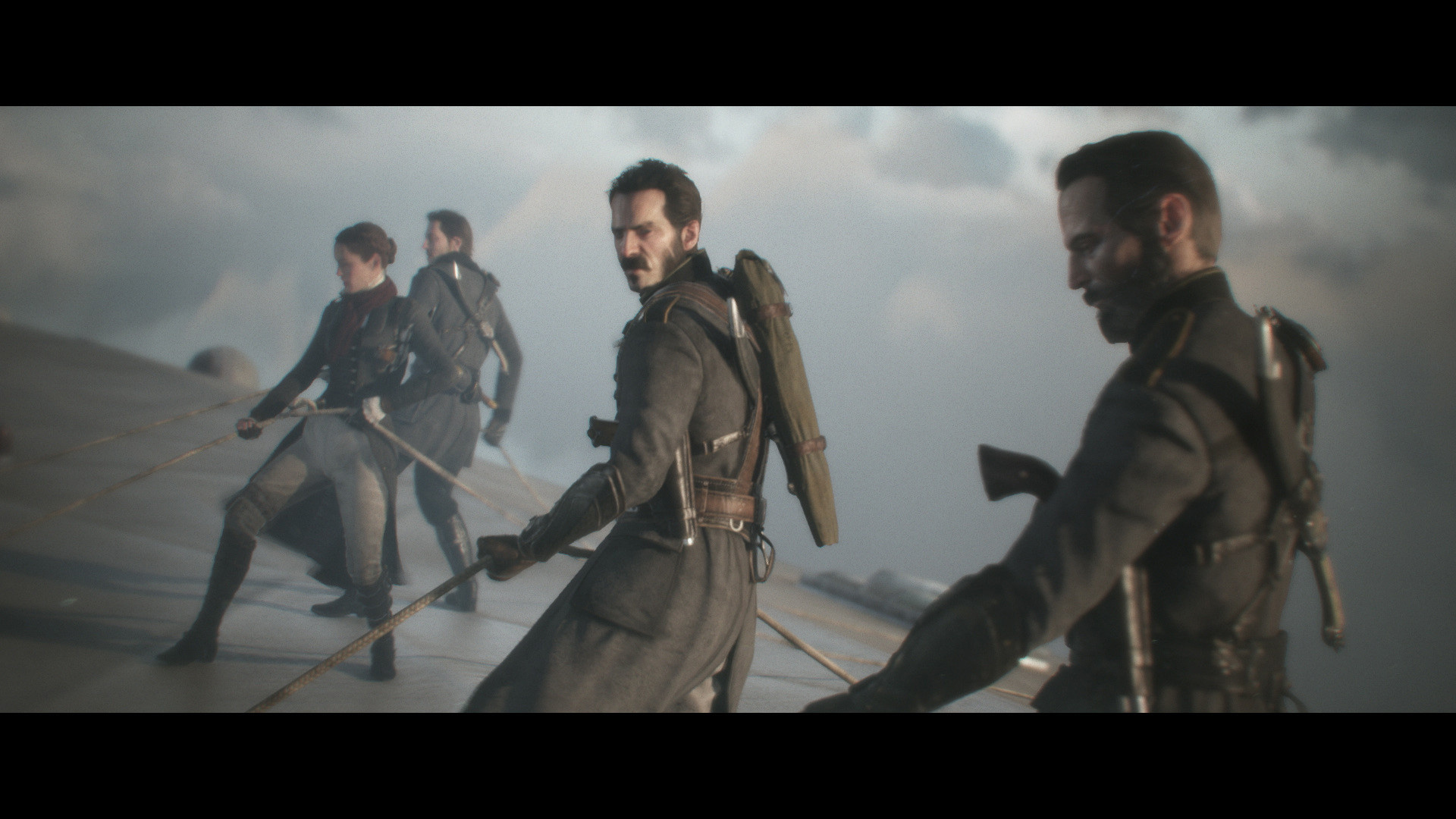
Last week The Order: 1886 was released to a tidal wave of criticism, at first centered around it's shockingly short length, 5-6 hours, and later for it's more critical failures, bland game play, little variety, reused sections, and a general overly scripted feel. The games unskippable cutscenes reportedly add to the games already short length and the argument has been made that there isn't more than a handful of hours of actual game play in the entire game. It isn't my place to criticize the development team at Ready at Dawn for their creative choices, if this is the game they intended players to play than I will form a subjective opinion of the end result but it would simply be my opinion. My main problem stems from an odd trend I've seen developing in the video game industry that I think should be examined before too much money is wasted on a disinterested audience.

During development of The Order: 1886 the games creative director and executive producer, Ru Weerasuriya was interviewed by Play4Real where he expressed disdain for having to make the game and wished him and his team could have made a film instead. In the interview he goes on to call video games archaic and described how the team preferred to work on character animations rather than interesting game play mechanics. It's a fascinating interview I suggest everyone read: link. I can't reiterate this enough, I can not criticize Ready at Dawn for making the game they wanted to make, but I feel better criticizing that they shouldn't have made a game at all, if the feelings above represented how they felt during development. Video games by their very nature and definition are interactive, lately games like Gone Home and anything from Telltale have reduced interactivity to emphasize story and characters but those games alter themselves based on player choices. The Order has been derided for it's unflinching linearity and countless moments where all control is taken away from the player. The cinematic world is vastly different from the interactive one, I love both but they are inherently very different and invoke different feelings.  

Another game developer, Remedy Entertainment, has also opted to focus on this cinematic experience in their next game, Quantum Break, a video game that is tied to a live action television series. How this will work has yet to be fully revealed but the game will somehow incorporate this show that Remedy themselves produced and inter-cut game play sections with the show they developed. Again I wonder why make a game at all, develop a television show if that's is what they want to do, in this day an age an entertainment company could be as diverse as they wanted. They can make games, television series, short films, feature films, comics, etc. But all of these mediums require a different skill set and offer wildly different experiences for the viewer/player/reader and they typically don't cross over. 

Telltale, a favorite developer of mine recently announced a project they've dubbed a "Super Show" where through a partnership with Lionsgate Entertainment, a film and television company, will produce a series that is "one part interactive playable content with one part of scripted television style content". It's still very early for Telltale and whatever it has planned but as you can see there seems to be a trend developing in the video games industry to develop content that is less game and more video. 

Again we are living in one of the most diverse and creatively charged eras of entertainment media, anything and everything is being developed and there are more avenues to distribute this vast array of content. But I fear game developers are developing projects that are half this and half that, which has the worrying chance of satisfying no one. Video games are interactive and the people who play them like them that way, just look at the response to The Order or the idiotic comments that Gone Home is a walking simulator. And films and television are very different beast and while these game companies are free to pursue different projects they should commit to one medium and not split their audience in half, by having one foot in the interactive space and one in the cinematic. 

Thursday, February 5, 2015

Quick & Dirty Reviews

Top Five (4 out of 5)
Chris Rocks most honest and revealing film is a career highlight and one of the best comedies of the year. Top Five sees Chris Rock playing, Andre Allen, a nearly identical version of himself with some extra modern day entertainment star qualities to allow for a dissection of the current state of entertainers, and boy does Rock have things to say. It's important to note Rock, directed, wrote and stars in this film and from the second the film starts you can tell this is the most Chris Rock has ever enjoyed himself making a film, it feels honest, it's filled with his friends, it's brimming with heart and most importantly it's hilarious. Top Five at it's most basic can be described as a critique on celebrities and reality stars, with some not so subtle remarks towards the talentless hacks who flood our TV sets. But Chris Rock isn't shy to tear himself apart either, openly mocking his poor creative endeavors and current feelings about being a celebrity. Top Five soars when it acts as Rock's most authentic voice yet and falter when the cliched telegraphed plot rears its head.

Begin Again (3 out of 5)
Begin Again succeeds almost entirely on the performances and chemistry of its two leads. Mark Ruffalo plays a record label executive who hasn't landed a hit in years who finds a young singer/songwriter with tons of potential played by Keira Knightly. Begin Again can be sappy at times but there is a genuine love for music on display and the endearing performances of the two leads keep the film from crumbling under the weight of all of its cliches. Ruffalo isn't playing against type but this is a role he plays so well it's impossible to begrudge him and Knightly has come back in a big way in the past few years and continues to deliver great performances that are slightly out of her comfort zone. One aspect of the film I wanted to point out simply because of how refreshing it was to see, was the romantic relationships that form the basis of these two characters current predicaments are complicated and messy. And the obvious chemistry between Ruffalo and Knightly thankfully doesn't turn into, two wounded souls find each other in the aftermath of difficult relationships. The film isn't going to blow anyone away but it's a well performed film, both spoken and sung, that it's hard to resist. 


More Soon ...

Friday, January 30, 2015

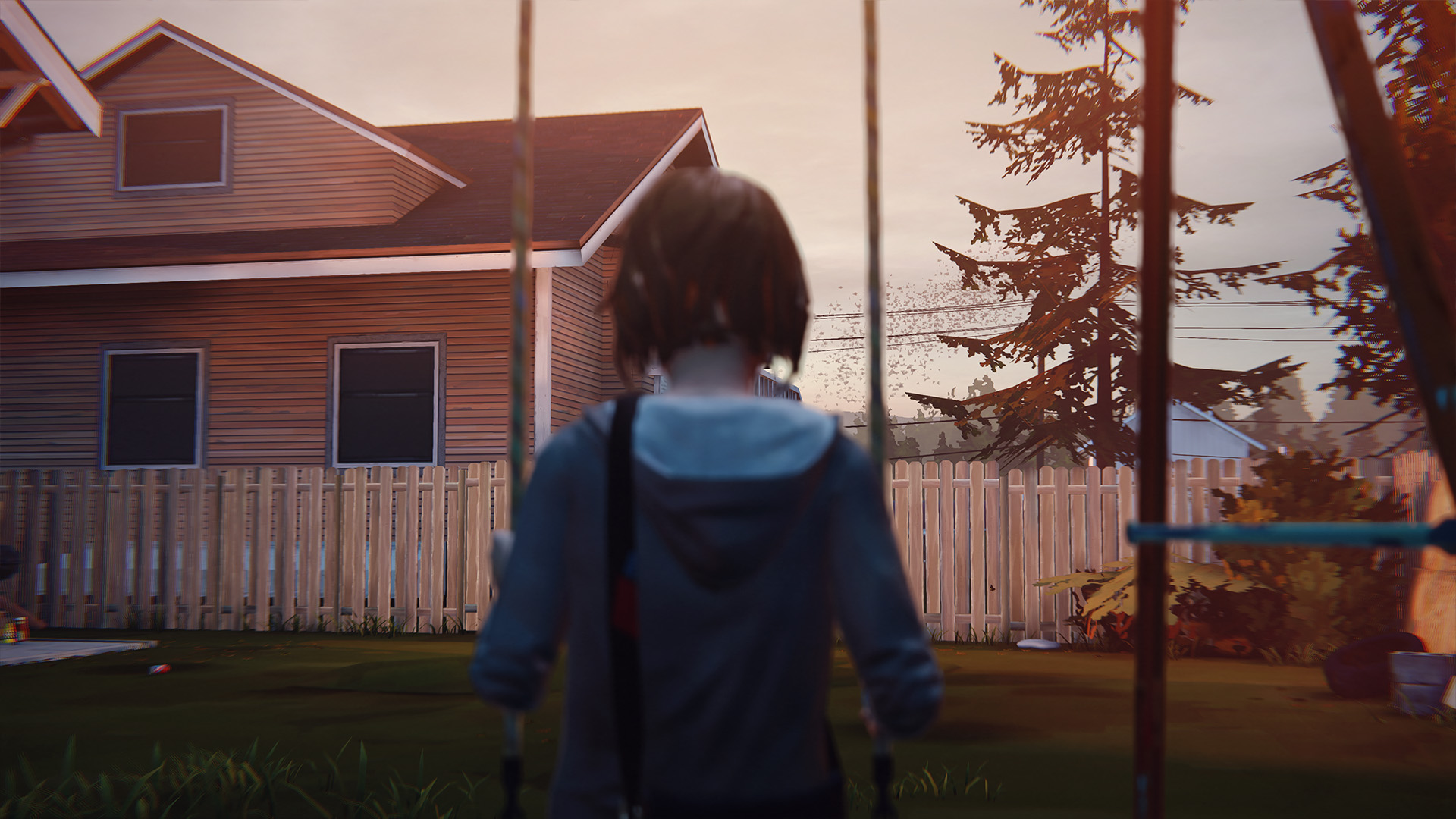
Life is Strange - Episode 1: Chrysalis Review

Life is Strange is an episodic adventure game in the vein of Telltale's recent output, focusing on Max Caulfield, a high school senior at a prestigious school in rural Oregon as she navigates the often messy relationships and life searching that typically pervade this time in a young adults life. Life is Strange purports to tell a high school coming of age story with a sci-fi twist, as Max soon discovers after witnessing the terrifying accidental shooting of her former best friend, that she can rewind time. What's interesting is that the developers, Dontnod Entertainment, use this ability not simply as a gameplay mechanic and puzzle solving device but as a way for Max to become more introspective. The game exudes a shockingly accurate depiction of an indie film, between the characterizations, the music, and the general tone of the writing, which unfortunately feels out of touch at times, Life is Strange clearly takes inspiration from films such as Juno and The Perks of Being a Wallflower to name a couple.
Life is Strange follows the formula most, if not all, adventure games use these days, focused on choices and consequences over traditional puzzle solving. Every response and action you take will have repercussions, some within that same episode and others over the entire season. What makes Life is Strange unique in this regard is the ability to rewind and alter your choices or simply retry interactions for better results. The game smartly allows you to abuse this mechanic quite a bit, allowing for experimentation and exploration of both the games mechanics and the stories characters. It's fun to redo a conversation after learning a key piece of information and having that interaction go more smoothly and exactly the way you wanted. Which is another reason why this mechanic is more than just that; the setting and tone of the story allow for this very 'game-y' mechanic to integrate with the story. Max reacts the way anyone would upon discovering this unbelievably useful ability. Think about how amazing it would have been to have this ability when you were in high school, thankfully the writers thought the same thing and sufficiently explore both the advantages and consequences to being able to literally redo any moment. 
This is the first episode of five so story wise there it's a lot of set up and only minor characterizations, there are a few characters who are clearly important but are severely underdeveloped as well as a darker underlying mystery that is just barely teased. The story and characters are, thus far, well crafted if slightly cliched but filled with potential, the darker themes and more serious aspects of the story can be jarring at first but as the full story slowly reveals itself it's clear this is a world grounded in reality and that our time with Max and her best friend Chloe is going to be far more serious than the initial introduction seems to imply. Overall Life is Strange seems like an exciting new adventure game from a fairly untested developer; Dontnod's only other game is the retrospectively ironically titled Remember Me. The wholly original setting and tone as well as the promise of a highly introspective character driven story is a highly appealing prospect to me and I can't wait for episode two.
(4 out of 5)

Saturday, January 10, 2015

Quick & Dirty Reviews

Big Hero 6 (4 out of 5)
For being yet another predictable super hero origin story, Big Hero 6 manages to pack enough heart and inventive action to make it one of the best animated films of the year. The film celebrates science like I've never seen in a children's movie, our heroes are self described nerds, and proud of that fact. They are inventors, engineers and chemists. The film also explores oft-ignored qualities like creativity and passion for learning. For these facts alone Big Hero 6 shoots way up my recommendations list. But thankfully the film is also unequivocally great; performances from the entire cast are fantastic and characters animate beautifully. Even the robot Baymax who never displays a single facial expression still manages to pull off the highly emotional finale, a credit to the fantastic performances and strong writing. This is a children's films that you can be happy to see and take children to go see, it treats it's audience with respect and never panders. No matter your age Big Hero 6 is an exciting super hero film that will inspire you and melt your heart.

Whiplash (5 out of 5)
For a movie based in the music world this film has little do with that particular artistic expression. Instead Whiplash is a phenomenal character study that delves deep into the psyche of two characters desperate to fill holes in their lives. A young aspiring jazz musician who wants nothing more than to be remembered and achieve recognition for his presumed talent. And a ruthless perennially unimpressed jazz teacher who despises anything less than utter perfection yearns to assist the birth of musical greatness. He pushes his students past the breaking point not dissimilar to the way the army breaks down recruits to build them back up as soldiers. An apt comparison as the first half of the film feels very much like Full Metal Jacket in music school. J,K. Simmons is an absolute animal in this film, and I mean that with all due respect, a quick glance from him with eyes filled with fury and it'll make you wince. His mere presence exudes intimidation, but his brutal treatment of his students earns every ounce of it. Miles Teller's performance starts off meek and slowly falls away to reveal a cutthroat ambition and drive that finds little happiness outside of achieving his teachers unreasonable expectations. The films gloriously intense climax is both blood soaked and triumphant, encapsulating both characters and their tragic psyches perfectly.

Kingsman: The Secret Service (3 out of 5)
A spy film that harkens back to the more campy era of Bond films, Kingsman: The Secret Service brings back the outlandish and fun spy genre. What's great about Kingsman is that it pokes fun of old school spy films while simultaneously crafting a fairly decent spy romp of it's own. Similar to Edgar Wright's Cornetto trilogy, Matthew Vaughn clearly loves the campier spy films of yesteryear and thus Kingsman's take on the genre feels more like a loving homage than cutting satire. The films plot is predictable and forgettable and you'll likely not add the film to your collection but it's a well executed action film. Colin Firth is enjoyably out of character as a badass gentleman spy mentoring a former colleagues wayward son. The action is kinetic, filled with inventive and infectiously paced scenes that'll have you tapping your foot along to the action and editing like a catchy song. Kingsman is an enjoyable two hours at the theater even if it isn't going to set the world on fire.

The Imitation Game (4 out of 5)
A wonderfully executed biopic of one of the most brilliant minds of the 20th century and a criminally unthanked contributor to the Allies successful defeat of  the Nazi's in World War II, Alan Turing. The Imitation Game is brilliantly acted, with Benedict Cumberbatch giving the most riveting performance of his career yet. Unfortunately this film feels very, Hollywoodized, the facts are true to life and the performances aren't melodramatic but everyone is a bit too clever, every scene a bit too important. I very much dislike films that come off as trying to hard to impress critics, to me it's distractingly obvious. But despite that fairly significant complaint this is still a great film, it's just trying too hard to be a prestigious one. I'm happy Alan Turing has finally received such a fine portrayal of his monumental contribution to the war efforts while also never diminishing what made the man other than his accomplishments. The Imitation Game is a great biopic led by a greater performance and it'll likely win big during award season, just as it was designed to do. 

Selma (3 out of 5)
Selma marks the very first time the story of Martin Luther King Jr.'s fight for civil rights has been told on film. Focusing around the intense three month period in Alabama, wherein peaceful protests were meet with viscous assaults which would later become known as Bloody Sunday as well as the eventual successful march from Selma to the capitol in Montgomery. While an unbelievable fact that King's monumental impact have never been committed to celluloid it may be because it was destined to have David Oyelowo in the lead role. Oyelowo gives a rousing performance as the man behind the myth, as the depiction of MLK in this film is of a man both fed up and tired. His rousing speeches are punctuated by quite moments where doubt, fear, regret and exhaustion eat away at his conscience as he struggles with how to lead his devote followers who he is putting in potential harms way. Oyelowo makes this movie, the story is fairly one sided and too many character come across as villains in what purports itself to be a biopic comes across outlandish at points. Selma contains a great performance of an astounding man but is surrounded by amateur storytelling that falls prey to often to lazy cliches.

Foxcatcher (5 out of 5)
Foxcatcher stars two unrecognizable stars, Steve Carell and Channing Tatum who not only disappear via prosthetics but through unnerving portrayals of two very unstable men. The direction feels very detached, Bennett Miller is more interested in letting scenes go on a couple of seconds longer then they normally would, which allows emotions to set in and the messy awkwardness to simmer. There is a rule to writing, "show, don't tell" and this film exemplifies that technique, the films most memorable or tense moments are completely silent but the actors performances portray more than any dialogue ever could. This isn't a plot heavy film, the characters and their personal journeys are the focus here and it makes these true events all the more tragic. What transpired at the Foxcatcher estate is surreal, at least as it's depicted here, with the things that fueled these men; greed, vanity, jealousy, loneliness, earning for respect, overcoming inadequacies, it's not surprise things ended such as they did. Foxcatcher is immensely unnerving and not entertaining in the least, it crawled deep under my skin and I'm counting the days till it crawls back out. Supported by two career defining performances by Carell and Tatum and an unsettling detached direction that unnerves in every silent moment, Foxcatcher is one of the best films of the year.

Boyhood (2 out of 5)
Boyhood is a technical achievement to be sure but the timescale it was filmed on proved to unwieldy for this director as the aimless story and odd pacing drag the film to a crawl. Boyhood is a nearly three hour home movie, with no core story to speak of the film relies on periodic segments in the life of one family, covering 14 real world years the characters age and grow on screen in the one truly astounding aspect of this movie. Otherwise this is a film that has nothing new to say about the adolescent experience and haphazardly leaps through time causing an odd sense of reliving key moments instead of the forward passage of time. The performances from the adults in the film are believably grounded and the most compelling part of the movie by far, it's a shame then that they are not the focus. I don't have many good things to say about Boyhood as I found it immensely boring and lacking in any substance or true vision. The filmmaker seemed content on just rolling the cameras on whatever new dramatic family moment he could think of next with years passing by in the interim.

More soon ...